When a chatbot answers from your own content, the quality of that content becomes the quality of the bot. The good news is that you do not need hundreds of answers to start. You need the right ones, written clearly.
1. Find the Questions Customers Really Ask
Your own records beat guesswork. Open the places where questions already pile up:
- Your inbox and contact form: the last few months of messages show repeated themes.
- Phone and in-person notes: staff usually know the top ten questions by heart. Ask them to list them.
- Reviews and social comments: people ask questions in public too.
- Search terms on your site: if you track them, they show what people could not find.
- Sales calls: objections and clarifying questions are often the same ones, week after week.
Group them into themes such as pricing, delivery, returns, bookings, product details and account help. A first batch of 20 to 30 well-written pairs usually covers the bulk of everyday questions, though the right number depends on your business.
A quick exercise: set a timer for twenty minutes and write down every question you or your team answered in the past week. Do not filter, just list. You will usually find that a handful of questions account for most of the list, and those are the ones to write first. Questions that appeared only once can wait, or be handled by a person.
2. Write the Answer First Sentence First
Lead with the direct answer, then add the detail. This helps visitors, and it also helps AI search tools quote you accurately.
| Weak | Better |
|---|---|
| "We value our customers and offer flexible options. Please see our policy." | "Yes, you can return unused items within the period stated in our returns policy. Start the return from your order page." |
| "It depends." | "Delivery takes the time shown at checkout for your address. Here is how to check it." |
Do not invent specifics to sound confident. If the real answer is "it depends", say what it depends on.
The table shows the pattern. The weaker versions sound friendly but tell the visitor nothing; the better versions answer in the first sentence and then point to what to do next. Notice that the better versions are also shorter. When you review your answers, read only the first sentence of each: if a visitor would be satisfied by that sentence alone, the answer is working.
Write in complete, plain sentences rather than fragments, avoid abbreviations your customers may not know, and define any term that is specific to your business the first time you use it.
3. One Idea Per Pair
A pair that tries to answer five things answers none of them well. Split it. "What is your returns window?" and "How do I start a return?" are two questions with two answers. Short, single-purpose pairs are easier to match to what a visitor types and easier to keep up to date.
An easy test is to look for the word "and" in the question. "What are your opening hours and how do I book?" is two questions. Split it, and link the answers to each other if they belong together. Splitting also makes updates safer: when your hours change, you edit one short answer instead of searching through a long one.
4. Include the Exceptions
Most wrong answers come from missing exceptions. If a policy has conditions, say so inside the answer: what is excluded, what the deadline is, who to contact if the case is unusual. A bot that states the rule without the exception is the kind of bot behind the problems we describe in why chatbots make up answers.
To find exceptions, ask your team: "When does this rule not apply?" and "What is the question people ask right after this answer?" The replies are usually the exceptions you need. Write them into the answer directly, such as "This does not apply to sale items" or "For orders over the limit, contact us first", using your own real terms.
5. Cover Different Ways of Asking
People rarely use your wording. "Refund", "money back", "return" and "cancel my order" may all point to related answers. Write the question the way a customer would say it, and add a short variation or two where the vocabulary differs. Do not copy-paste the same answer under ten headings; one clear answer is better than ten near-duplicates.
A helpful practice is to read real customer messages and copy their wording into your variations. If customers say "how long till it arrives?" while your page says "delivery lead time", the bot should recognize both. Avoid stuffing keywords; two or three natural phrasings are enough.
6. Decide What the Bot Should Not Answer
Some topics belong with a person: complaints, legal matters, medical or financial advice, anything involving a specific account. Decide these up front and make sure the bot hands over instead of guessing. We cover this in when a chatbot should hand over to a human.
Write a short list of "hand over" topics and agree it with your team. For these, the best bot reply is a polite message saying a person will help, plus a way to leave contact details. That list also protects you: it shows you thought about where automation should stop.
7. Keep It Alive
A knowledge base is never finished. These four habits keep it accurate and useful over time.
- 1Review unanswered questions weekly at first. They are a free list of what to write next. In ConvoRail, the dashboard lists the questions your knowledge base missed.
- 2Update with every policy or price change. An outdated answer is worse than none.
- 3Retire old pairs. Remove offers and rules that no longer apply.
- 4Read a few real conversations. You will spot wording problems no checklist catches.
Pro Tip: Write answers in the tone you would use speaking to a customer in person: plain, polite and specific. Avoid internal jargon and policy-document language.
Put the review in your calendar. Fifteen minutes each week for the first month, then monthly, is enough for most small sites. Each session, read the missed questions, write or update a few answers, and retire anything outdated. Over time the knowledge base becomes an accurate record of what your customers want to know.
Summary
Good Q&A pairs come from real customer questions, direct first sentences, one idea each, honest exceptions and regular review. Start small, ship, and let the questions the bot misses guide what you write next.
Key takeaways
- Source questions from your inbox, staff, reviews and sales calls rather than guessing.
- Lead each answer with the direct reply, then add detail.
- Keep one idea per pair and include the exceptions inside the answer.
- Write questions the way customers phrase them, but avoid duplicate near-identical pairs.
- Review the questions the bot could not answer to decide what to write next.
Quick Summary
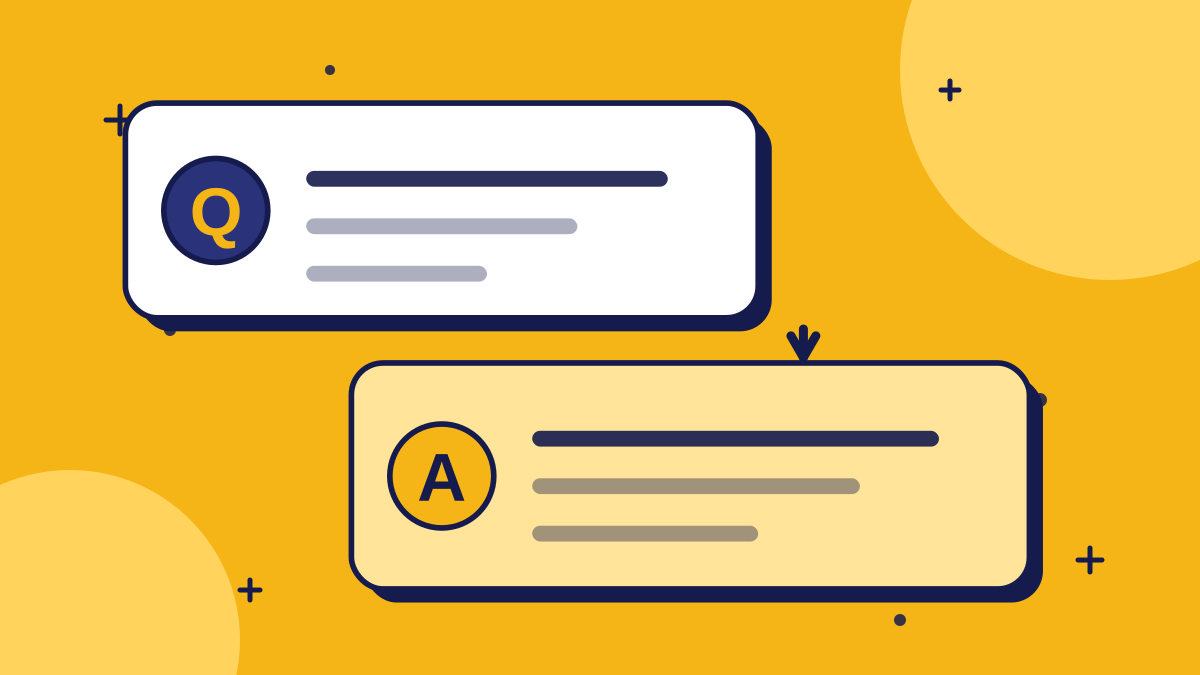
Q&A pairs are the question-and-answer entries that a grounded chatbot answers from. Write them by collecting the questions customers really ask, leading each answer with the direct reply, keeping one idea per pair, including exceptions and phrasing questions the way customers do. Decide which topics should go to a person, and review the questions the bot could not answer to find what is missing. A first set of 20 to 30 clear pairs often covers everyday questions.
Want to see grounded answers on your own site?
Start free, add your Q&A pairs and paste one script tag. No credit card required.

Founder & CEO
Writes about grounded AI chatbots for websites: how they work, how to measure them and what to check before you buy.
Topics
Get new posts by email
Guides on AI chatbots for websites, straight to your inbox.