Many businesses give their chatbot a friendly human name and a photo, and never say it is automated. Rules and expectations are moving the other way. This post summarises the main ones in plain language. It is general information, not legal advice, and the details need checking against official sources for your situation.
1. The EU: Article 50
The EU AI Act includes transparency duties for certain AI systems. For chatbots, the core duty is that users should be informed they are interacting with an AI system, unless it is obvious from the context.
- Timing: secondary commentary says these transparency obligations took effect on 2 August 2026, and that the Digital Omnibus changes delayed the high-risk rules rather than this one. Some sources describe a separate grace period for marking synthetic content.
- Penalties: the same commentary reports fines for breaches of these duties can reach EUR 15 million or 3% of worldwide annual turnover, whichever is higher.
- Caveat: we relied on secondary sources, not the Regulation text. Confirm dates and penalties against the Official Journal or the European Commission's AI Act pages before relying on any of this.
Even if you are outside the EU, this may apply to you in practice. Many websites serve visitors from several countries, and a clear label on your chatbot is a single change that works everywhere. It is simpler to adopt one honest standard than to try to switch wording by region.
Because the dates and penalties above come from secondary commentary, treat them as pointers to check. The Regulation itself and the European Commission's pages are the places to confirm what applies to you.
2. California: The Bot Disclosure Law (SB 1001)
California's law, effective 1 July 2019, bars using an automated account to deceive people about its bot status in order to encourage a purchase or influence a vote. According to Perkins Coie's overview, it does not strictly require a bot to identify itself, but a disclosure that is "clear, conspicuous, and reasonably designed to inform" people they are dealing with a bot avoids liability under that law.
Commentators disagree on how far it reaches into customer-service chatbots. One view is that pure customer-service use is likely exempt because the law targets commercial inducement; another says site chatbots that recommend products need careful thought. The law is also described as cumulative with other duties, so disclosure is not a complete shield.
A useful takeaway from this law is its wording: "clear, conspicuous, and reasonably designed to inform". That is a good description of a sensible disclosure in any country: easy to see, easy to understand and placed where the visitor will actually notice it, not buried in a footer.
3. Why Disclose Even If You Might Not Have To
Even where the law is unclear, there are practical reasons to be open about using a bot. These three are the main ones.
- It builds trust. Visitors who know it is a bot forgive its limits more easily and know a human route exists.
- It lowers legal risk. Both regimes above point toward clear disclosure as the safer course.
- It sets honest expectations. Combined with a handoff, it avoids the frustration of feeling tricked. This connects to the liability lessons from the Air Canada case.
There is also a practical customer-service benefit. When visitors know they are talking to a bot, they tend to phrase questions more directly and are more willing to ask for a person when the bot cannot help. That leads to cleaner conversations and fewer frustrated visitors than when someone feels deceived and discovers it halfway through.
4. A Simple Way to Do It
Disclosure takes only a few minutes to set up. Follow these steps and keep the wording short and friendly.
- 1Label the widget. Use wording such as "AI assistant" in the header, not just a human first name.
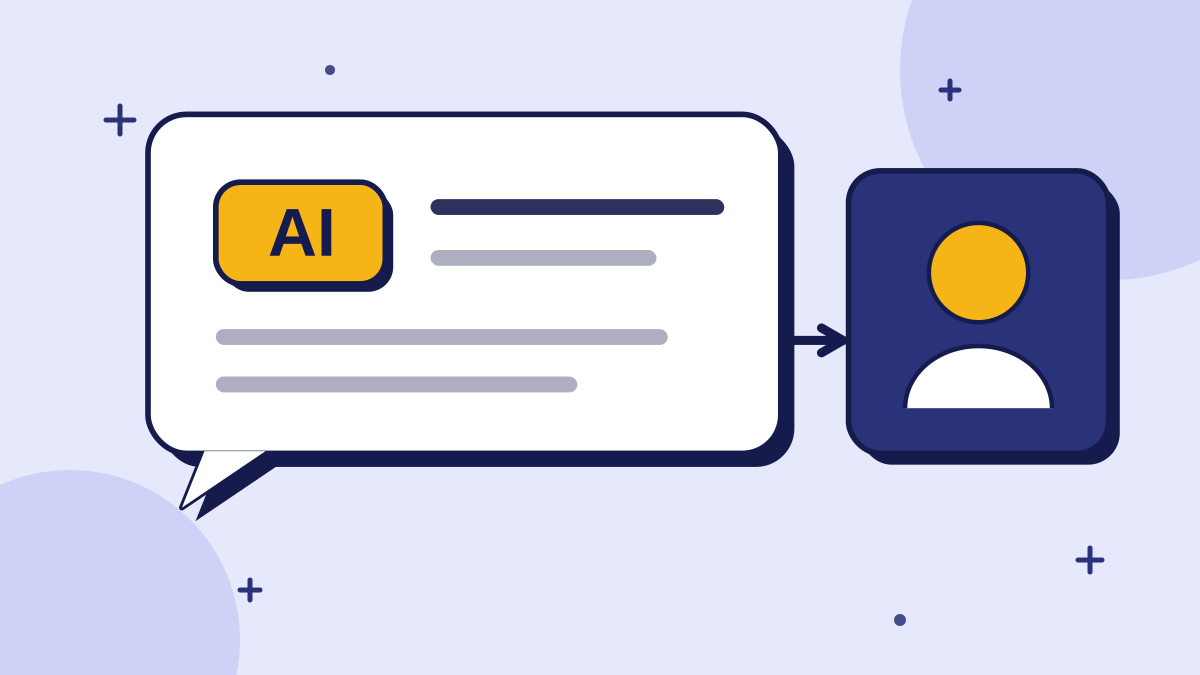
- 2Say it in the first message. For example: "I'm an automated assistant. I answer from this company's information and can pass you to a person."
- 3Make the human route visible. Offer a way to reach a person, and honour it.
- 4Do not imply a human. Avoid fake typing delays, photos of real people or claims like "I'll check with my manager" from a bot.
- 5Revisit when rules change. Add a reminder to review disclosure wording once a year. For wider rules see our overview of AI regulation for small businesses.
Pro Tip: Keep the disclosure short and friendly. A single clear line at the top of the chat does the job without spoiling the experience.
Test your disclosure the way a visitor would. Open your site on a phone, start the chat and see whether it is obvious within a few seconds that you are talking to software. If you had to hunt for the information, so will your visitors. Ask a friend who has not seen the chat to try it and tell you what they thought they were talking to.
5. Example Wording You Can Adapt
Disclosure does not need legal language. Plain, friendly wording works best, and it should match your brand's voice. Here are three patterns you can adapt, in your own words, for the header of the chat window, the first message and the handoff message.
- Header label: "AI assistant" or "Automated assistant" next to your company name, not a human first name alone.
- First message: a short greeting that says it is automated, what it can help with, and that a person is available if needed.
- Handoff message: a line explaining that a teammate will take over, and roughly when to expect a reply, using your real working hours.
Avoid the opposite patterns: a human name and photo with no label, fake typing pauses designed to look like a person, and phrases that imply a human is thinking, such as "let me check with my colleague" when it is really a bot. These might feel friendlier in the moment, but they are what disclosure rules are aimed at, and they damage trust when visitors work it out.
Finally, keep a record of what your chat says and when you changed it. If someone later asks how your chatbot presented itself on a given date, you will be able to answer. A simple note in a shared document, with the date and a screenshot, is enough.
Summary
Disclosure is moving from nice-to-have to expected. The EU requires users to be told when they are talking to AI, California rewards clear disclosure, and plain honesty is good practice anyway. Label your chatbot, offer a human route and check the official texts for your market. For legal certainty, ask a qualified adviser.
Key takeaways
- EU AI Act Article 50 requires users to be informed they are interacting with an AI system, unless it is obvious.
- Secondary sources say this applied from 2 August 2026; verify dates against official texts.
- California's SB 1001 does not strictly require bot disclosure, but clear and conspicuous disclosure avoids liability under it.
- Disclosure is not a complete legal shield, and this post is not legal advice.
- The low-risk habit is to label the chatbot as automated and offer a human route.
Quick Summary
Chatbot disclosure means telling visitors they are talking to an AI. Under EU AI Act Article 50, deployers must inform users they are interacting with an AI system unless it is obvious, and secondary sources say this applied from 2 August 2026. California's SB 1001, effective July 2019, does not strictly require disclosure but a clear, conspicuous one avoids liability under it. This is general information, not legal advice; the simple low-risk approach is to label your chatbot as automated, say so in the first message and offer a human route.
Want to see grounded answers on your own site?
Start free, add your Q&A pairs and paste one script tag. No credit card required.

Founder & CEO
Writes about grounded AI chatbots for websites: how they work, how to measure them and what to check before you buy.
Topics
Get new posts by email
Guides on AI chatbots for websites, straight to your inbox.