A growing share of people start a purchase decision by asking an AI assistant for recommendations instead of typing into a traditional search box - "find me a good [service] near me," asked conversationally, with the assistant doing the comparing. That's a real, gradual shift in how customers discover businesses, and it's worth understanding at a practical level even if it doesn't change what you do overnight.
1. What's Actually Changing
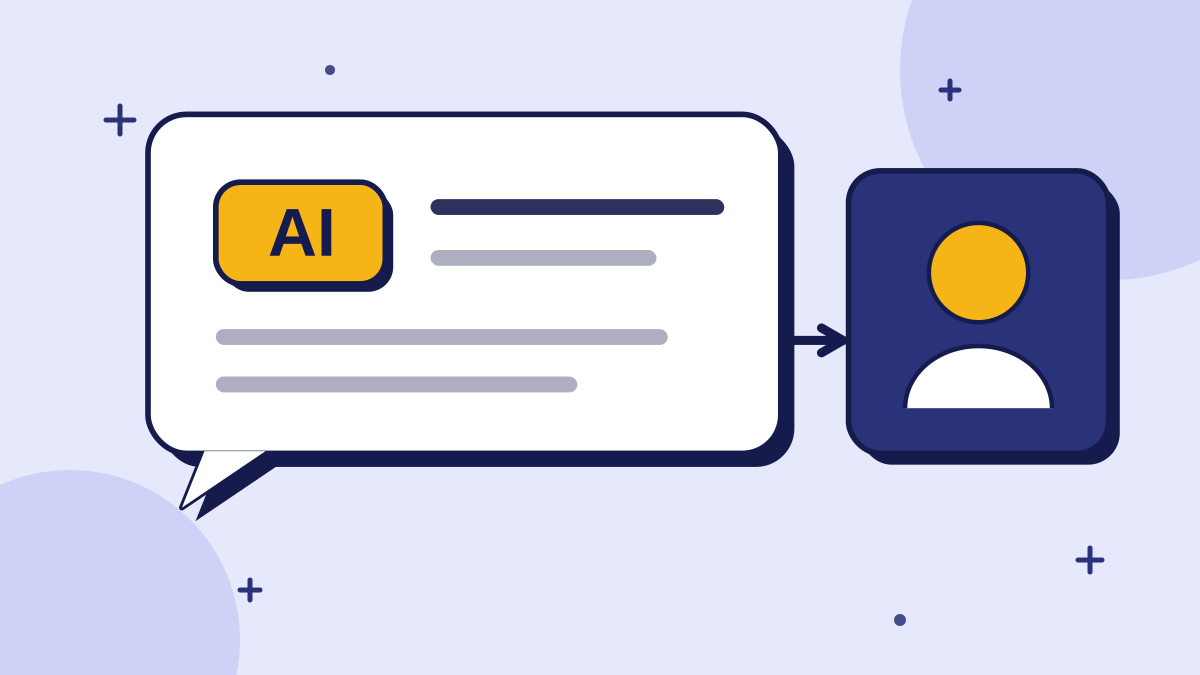
Traditional search returns a list of links for a person to click through and evaluate themselves. An AI assistant instead synthesizes an answer or recommendation directly, often citing a small number of sources. That's a meaningfully different discovery path - your business needs to not just rank, but be the kind of clear, well-structured source an AI can confidently summarize and recommend.
Imagine a customer asking an assistant, "Which local accountant is good for small restaurants and answers questions quickly?" The assistant does not show ten links. It names two or three businesses with a sentence about each. If your business is not mentioned, or is described wrongly, the customer may never see your website at all. That is the practical difference: the comparison happens before the click.
This does not mean traditional search is going away. Many people still use both, and the share of people using assistants for discovery is still growing rather than settled. The sensible response is to treat assistant discovery as an additional channel that rewards the same habits, not a replacement that demands a new strategy.
2. Why This Isn't a Completely New Problem
The reassuring part: the underlying fundamentals haven't changed as much as the framing suggests. AI assistants, like search engines before them, favor content that's clear, accurate, well-organized, and genuinely useful - the same qualities that have always mattered for being found online, just applied to a new kind of "reader."
Think about how a human would summarize your business after reading your site for a minute. Could they tell what you sell, who it is for, where you operate and how to contact you? An assistant faces the same challenge, only faster and with less patience for vague copy. Phrases like "innovative solutions for modern businesses" give it nothing to repeat. A line like "We install and repair home solar panels in Jaipur" gives it something concrete.
That is why clarity is the common thread. Plain language, specific facts and a logical page structure help a human skimming on a phone and an assistant extracting a recommendation in the same way.
What's Genuinely New
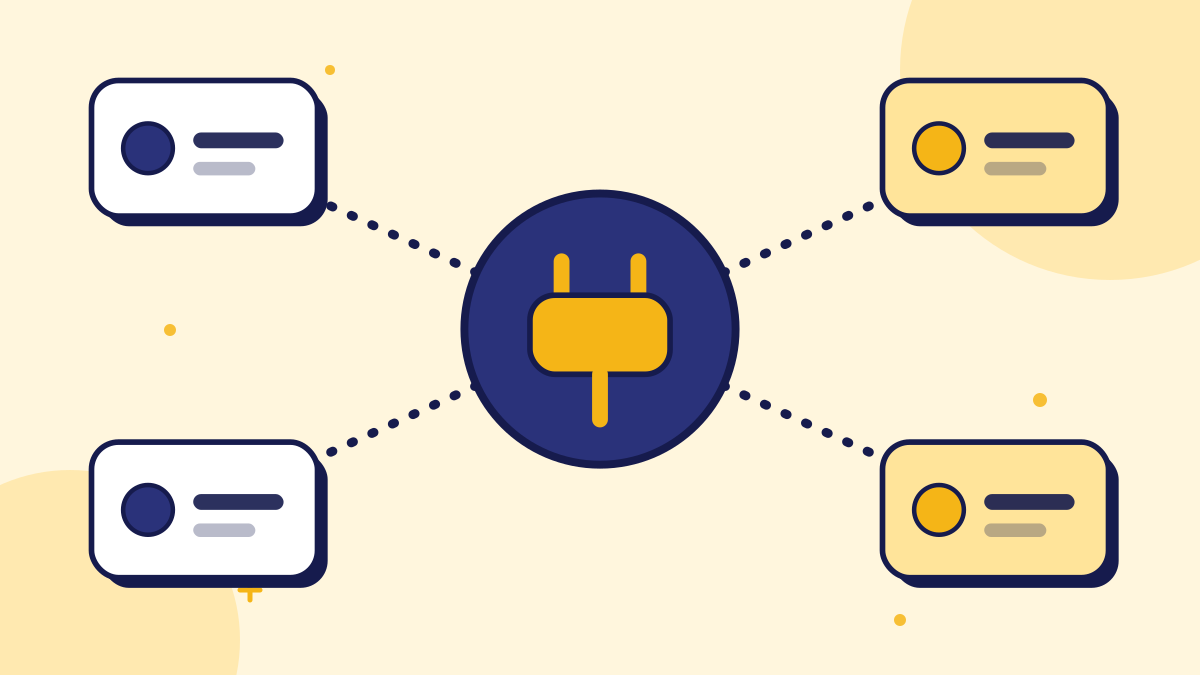
A few things are worth paying attention to specifically: structured data that makes your business's key facts (hours, services, location, pricing) machine-readable rather than buried in prose; content that directly and clearly answers common questions, since that's exactly the shape of content an AI assistant tends to extract and cite; and consistency across the places your business is mentioned online, since an AI assistant may be drawing from multiple sources at once.
Pro Tip: A simple test: read your own homepage and FAQ as if you were an AI trying to summarize your business in two sentences to someone who asked for a recommendation. If the clear answer isn't there in plain text, an AI has to work harder to find it - and may skip you for a competitor whose site makes it easier.
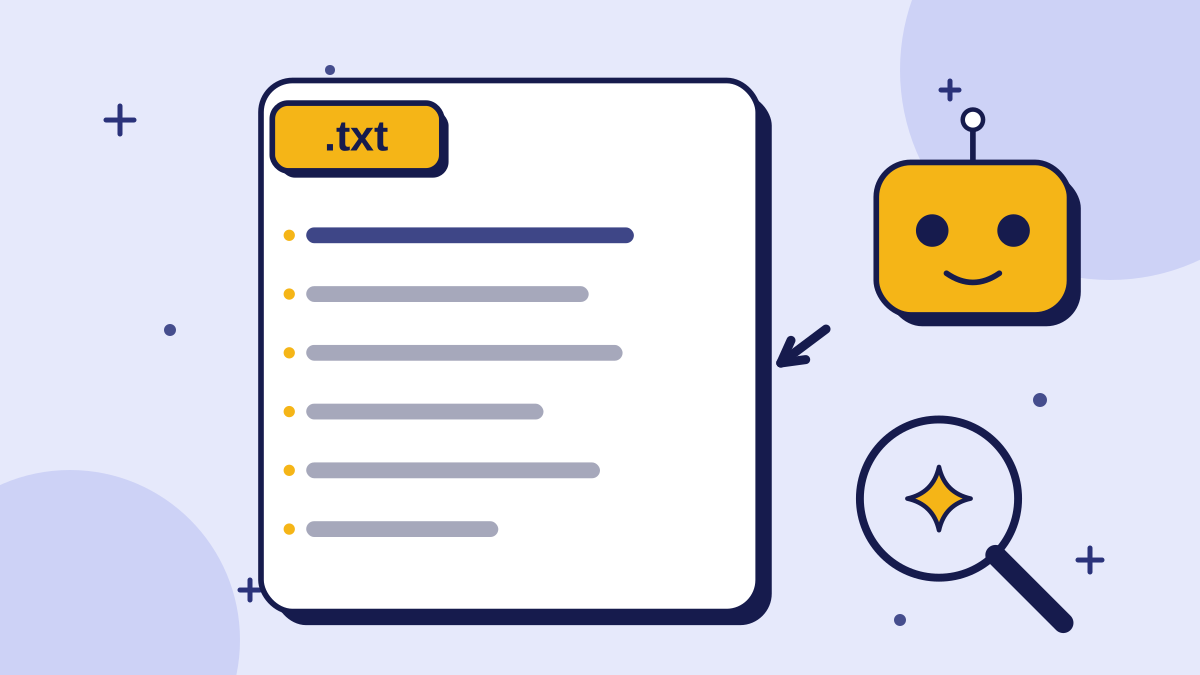
Structured data is the clearest example. It is a small block of code, invisible to visitors, that states facts such as your business name, address, opening hours and services in a standard format. You do not need to write it by hand; most website platforms and plugins can generate it. The point is that it removes guesswork for any system reading your page.
Consistency matters because assistants may draw on several sources. If your website says you open at 9 and an old directory listing says 10, the answer a customer receives may be wrong, and the customer will blame you. Reviewing your main listings once or twice a year is a small habit with an outsized effect.
3. Where a Chatbot Fits Into This
There's a second, related layer here beyond how AI assistants find you externally: once a customer does land on your site, a well-grounded chatbot means their own AI-style question - asked directly to you instead of a third-party assistant - gets answered accurately from your actual content, rather than a generic search of your page. That's the same underlying principle (clear, structured, accurate content an AI can act on) applied to your own site's conversation layer.
Think of it as two halves of the same journey. The first half is an assistant deciding whether to recommend you. The second half is the visitor arriving and asking you directly. A chatbot grounded in your own content is the second half done well: the visitor gets an answer from your real policies and prices, not a generic reply, and if the bot does not know, it says so and passes the question to your team.
The two halves also feed each other. The questions visitors ask your chatbot are a free list of the questions people want answered. Turning the common ones into clear FAQ entries on your website improves your chances of being understood and cited by assistants as well.
4. Practical Steps Worth Taking Now
None of this requires an overhaul - it's mostly about making sure your existing content is genuinely clear and complete.
- 1Make sure core facts are stated in plain text, not just implied by an image or buried in a PDF - hours, services, location, pricing basics.
- 2Add clear FAQ-style content that answers the actual questions customers ask, in the language they'd use to ask an AI assistant.
- 3Keep your business information consistent across your website, directory listings, and review platforms.
- 4If you have a chatbot, make sure it's grounded in your real content - see our primer on what that actually means - so it's a reliable extension of this same principle on your own site.
Do the steps in order of effort. Stating core facts in plain text takes an afternoon. Writing ten honest FAQ answers takes a few more hours. Checking listings for consistency takes about an hour. None of this needs a specialist, and all of it also helps your human visitors.
A reasonable review rhythm is to revisit these once a quarter. Business details change quietly: a new service, a different phone number, a seasonal schedule. Content that was accurate in January and never updated is exactly the kind of source that causes an assistant to repeat something out of date.
Summary
More customers are starting their search with an AI assistant rather than a traditional search box, which is a real shift worth paying attention to - but the underlying fundamentals of being clear, accurate, and well-structured online haven't changed. Treat this as a reason to tighten up content you should have anyway, not a reason to chase a completely new strategy.
The businesses that will be easiest for AI assistants to confidently recommend are the same ones that have always been easiest for a human to quickly understand.
Key takeaways
- More customers are starting purchase research by asking an AI assistant for recommendations rather than a traditional search engine.
- AI assistants favor content that's clear, accurate, well-structured, and directly answers common questions - largely the same fundamentals as good SEO.
- Structured data, clear FAQ-style content, and consistent business information across the web all help AI assistants confidently summarize and recommend you.
- A grounded chatbot on your own site extends this same principle - answering a customer's direct question accurately from your real content.
- This is mostly about tightening content fundamentals you should already have, not chasing an entirely new strategy.
Quick Summary
A growing share of customers now ask an AI assistant for recommendations before searching traditionally, and AI assistants tend to favor content that's clear, accurate, well-structured, and directly answers common questions - which is largely the same foundation as good SEO, applied to a new kind of "reader." Practical steps: state core business facts in plain text (not buried in images or PDFs), add clear FAQ-style content in the language customers actually use, keep business information consistent across the web, and make sure any chatbot on your own site is grounded in your real content so it extends the same principle when a customer asks you directly.
Want to see grounded answers on your own site?
Start free, add your Q&A pairs and paste one script tag. No credit card required.

Founder & CEO
Writes about grounded AI chatbots for websites: how they work, how to measure them and what to check before you buy.
Topics
Get new posts by email
Guides on AI chatbots for websites, straight to your inbox.